“Protein-fortified” is the new “sugar-free” or “low-fat” — an inescapable nutrition phenomenon that deserves careful consideration.
TikTokers warn us that we're protein deficient and food labels scream from the grocery shelves about protein grams per serving. Everything from pasta to cookies to even water is now being protein-fortified. The message is clear: Protein is an essential building block that promotes muscle, immunity, growth, and repair, so you’d better eat up.
The result of this fixation on protein? Nearly three-quarters of U.S. adults say they’re trying to eat more protein, according to a 2024 survey.
But some experts think we’ve gone too far. Though there are exceptions, most of us get all the protein we need and don’t need to power through another roasted chicken breast or David bar.
Here’s the no-hype take on how much protein you really need, and why you need it.
1 of 4
Why is protein important?
Most of us think about protein as the foundation for muscle, but this is just one of the many roles it serves. Made up of amino acids, protein is necessary for the structure, function, and regulation of the body’s cells and organs.
A few essential roles of protein include:
- Creating antibodies and fighting infection
- Transporting fat, vitamins, minerals, and oxygen around the body
- Building new muscles, skin, and hair
- Keeping body fluids in balance
- Clotting blood
If you don’t get enough protein on a regular basis, it can lead to muscle weakness, brittle hair and nails, feeling weak or fatigued, and an increased susceptibility to getting sick.
2 of 4
How much protein do you need?
While our bodies can make some types of amino acids, we have to get other types from our diet. This intake needs to be resupplied daily because we don’t store protein as we do fats and carbohydrates.
The amount of protein you need depends on several factors, including your age, sex, size, and activity level. But roughly speaking, it’s recommended that most adults eat 0.36 grams of protein per pound of body weight every day. Here’s how that breaks down for different weights:
Body weight | Daily protein |
120 lbs. | 43 grams |
140 lbs. | 50 grams |
160 lbs. | 58 grams |
200 lbs. | 72 grams |
240 lbs. | 86 grams |
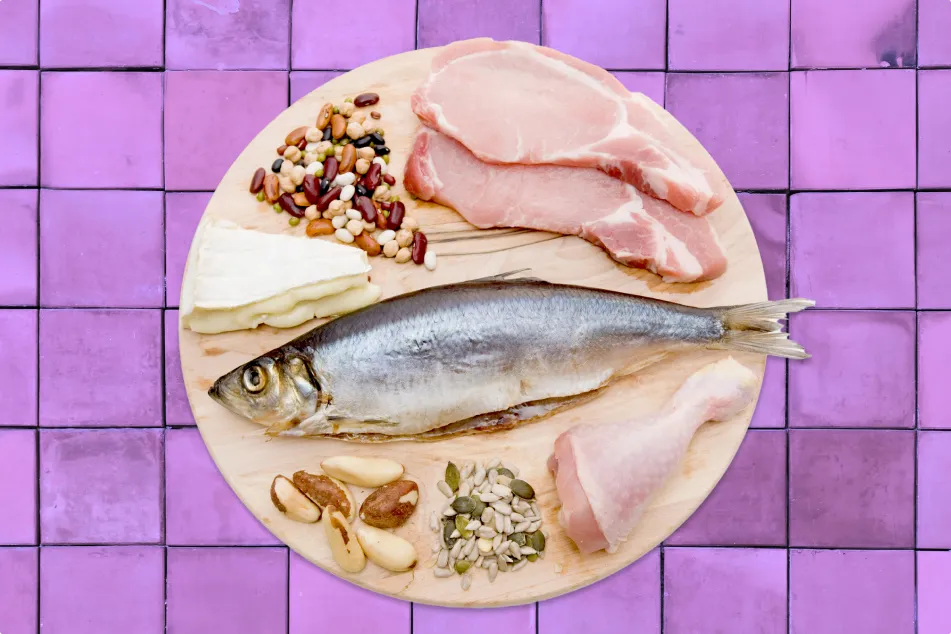
For context, an 8-ounce chicken breast has more than 50 grams of protein, while ½ cup of beans has between 8-19 grams. Here’s more information about protein in common foods:
Food | Protein |
Rice, pasta, 1/3 cup | 3 grams |
Tofu, 1 oz | 3 grams |
Egg | 6 grams |
Peanut butter, 2 tbsp | 7 grams |
Fish, tuna fish, 1 oz | 7 grams |
Beef, chicken, turkey, pork, 1 oz | 7 grams |
Milk, 8 ozs | 8 grams |
Lentils, ½ cup | 9 grams |
Hummus, 1/3 cup | 7 grams |
Greek yogurt, plain, nonfat | 12-18 grams |
Edamame, dry roasted, 1 oz | 13 grams |
Cottage cheese, ½ cup | 14 grams |
3 of 4
Which groups of people may need to up their protein intake?
While most people do get enough protein, some people may need to boost their intake, either because they struggle to consume the recommended amount or because they need more than what’s typical.
Anyone on a GLP-1 agonist or other obesity medication.
Rapid weight loss can cause your body to break down muscle for energy; higher levels of protein intake are required to compensate for this. This is one reason why people on GLP-1 medications, who are at risk for muscle loss, need extra protein — at least 60 grams a day. “A general rule of thumb for people on GLP-1s is to try to get a serving of protein in every meal,” says Marc-André Cornier, MD, president of The Obesity Society and director of Endocrinology, Diabetes and Metabolic Diseases at the Medical University of South Carolina.
The appetite suppression experienced on GLP-1s also impacts protein intake. “It can be difficult to get enough protein because your appetite is low, and protein makes you feel more full,” Cornier explains.
Anyone trying to lose weight.
When you’re limiting your diet to restrict calories, sources of protein may be cut out inadvertently. Studies show that teenage girls and women are at particular risk of skimping on protein.
You’re getting buff.
If you’re trying to build muscle, you likely need more protein to support that growth. Experts recommend getting 50% more than the recommended level. For a 140-pound person, that would be 75 grams daily.
4 of 4
Can you eat too much protein?
Most people won’t damage their bodies directly by consuming too much protein, but there can be indirect harms.
- If you’re filling up on protein, you’re likely eating fewer other foods like fruits, vegetables and whole grains, which are important for your overall health.
- If you’re getting your protein from animal sources, you may also be consuming higher levels of unhealthy fats, which have been linked to heart disease and earlier mortality.
- If you have kidney disease, too much protein may put excess strain on your kidneys.
Bottom line: while protein is an essential nutrient, more is not necessarily better.