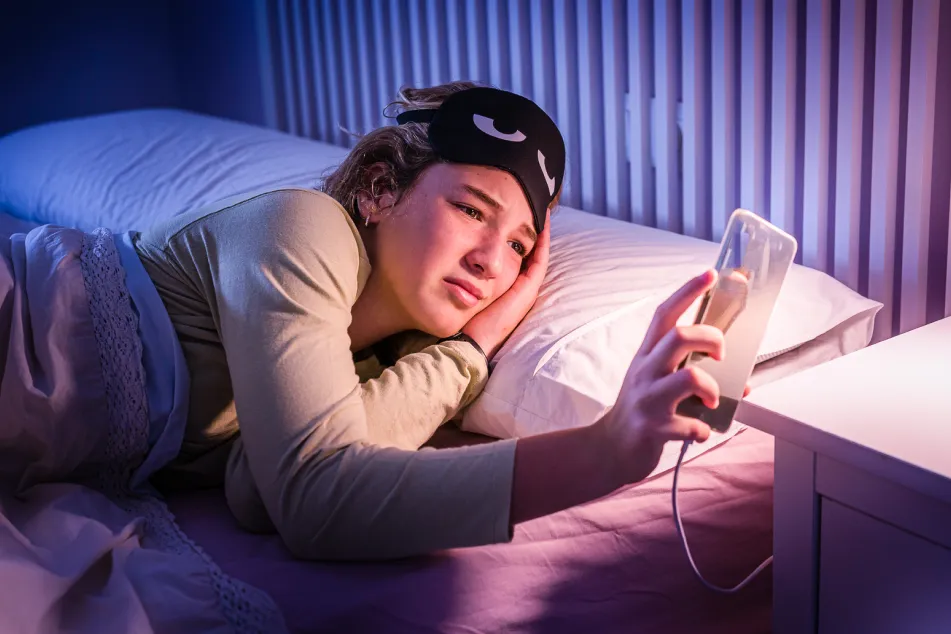
Q: I keep hearing that I shouldn’t use devices at night because the blue light can make it harder to fall asleep. But sometimes, watching Netflix helps distract me from my worries. Should I stop?
I’m going to be a little contrarian here and say, “Not necessarily.”
It’s true that “no screens before bed” tops the list of sleep hygiene rules — and for good reason. Device use is a primary driver of delayed and lost sleep, which has significant consequences for your health.
But we need to add a little nuance into this conversation because the maxim does not apply to every person in every scenario — and the research is not definitive. It’s a complicated question, and the answer really is, “It depends.” Here’s what we know about screens and sleep.
The blue light may not be to blame.
We know that exposure to light can suppress melatonin, the hormone that helps us feel sleepy, and that exposure can delay our drive to go to sleep. But it’s not clear whether the light from our phones always has this effect.
The glow from your phone can feel intense, especially in a dark room, but the actual light exposure from a handheld device is relatively modest compared to natural daylight or even standard indoor lighting. A review of multiple studies found little evidence that screen light in the hour before bed delays your sleep. In the studies that do show an effect, the delay in falling asleep is typically only a few minutes.
The drama may be the problem.
That said, abundant research shows that using electronic devices before bed can delay sleep. If it’s not the blue light that’s causing this delay, what is?
The culprit may be the content you’re viewing, not the brightness of your device. Many apps and streaming platforms are engineered to keep you scrolling. Social media feeds, viral videos, and cliffhanger episodes are designed to keep you engaged — and engagement keeps you awake.
Also, compelling content often triggers emotions — both positive and negative — which can activate your brain. Even checking your email could be dangerous if doing so reveals a stressful task or upsetting news. Exchanging emotional texts with a friend can disturb your placid mood. Even shopping on Amazon can elicit a range of feelings and thoughts that keep you stimulated. One study found that interactive activities like gaming, messaging, or device-based tasks delay sleep more than passive activities like watching a streaming platform, listening to a podcast, or reading.
Try to be aware of how your screen time is impacting your emotions or engaging your brain, and look for alternatives that keep your mood and thoughts relaxed and calm.
Devices may help more than they hurt.
Some people who experience anxiety or racing thoughts that interfere with sleep find that using a device before bed can alleviate their stress, not increase it. Watching a lighthearted show, solving Wordle or Spelling Bee puzzles, or reading a book on Kindle quiets their mind. These activities command just enough attention to shift focus off of worries. For these people, thoughtful device use helps them unwind and settle down for sleep.
So, if the no-device rule works for you, stick with it.
But if watching a bit of feel-good, low-key content or playing a relaxing game before bed calms you, while not ideal, the benefit probably outweighs the cost.