In the middle of a patient visit in November 2004, I reached a breaking point.
As a cardiologist in Columbus, Ohio, for many years I’d been diagnosing heart disease, performing procedures, managing risk factors — and repeatedly failing at motivating my patients to be more active.
In the clinic, we’d discuss the evidence: how walking could reduce the risk of heart attack, stroke, diabetes, and many cancers; how it could strengthen muscles, sharpen our minds, and lift our spirits. My patients seemed persuaded.
Yet at every six-month follow-up, it was the same story: Nothing yet. No exercise routine had been started.
That November day, I sat facing yet another patient whose health would benefit dramatically from an exercise habit, but who could not start one despite a genuine desire to do so.
I realized if I had the same conversation I always did, the same result — or lack of result — would follow. I couldn't keep replaying this charade for the rest of my career. I did not want to hear one more promise about starting later.
So, I asked a question that changed everything.
“Would you be interested in joining my family and I at the park on a Saturday?”
“Which park?” the patient asked. “And what time?”
And just like that, we were off to the races. By the next day, word had spread and I was fielding questions from office staff, community partners, and local media.
Over the next five months of planning, through the gray skies and slushy sidewalks of an Ohio winter, I collected nearly 800 email addresses from patients who said yes, they wanted to be part of something different.
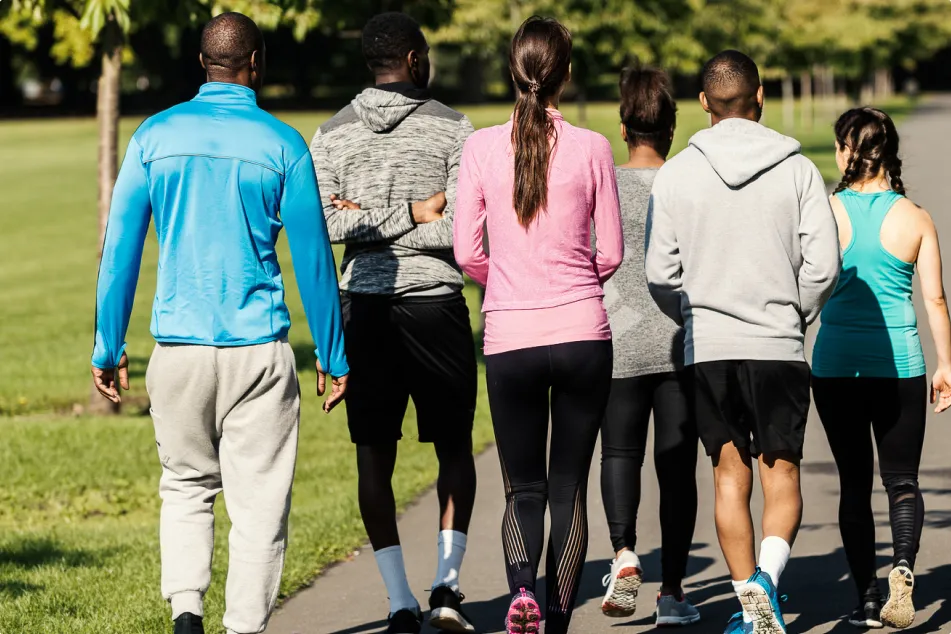
To my surprise and deep joy, more than 100 people showed up that first Saturday morning for our inaugural walk. As we walked together, with the sun rising and birdsong everywhere, something powerful happened. We were no longer in a sterile exam room. People were smiling. We were neighbors, a community. We were moving — not just physically, but socially and emotionally.
That first walk reminded me of something I had always known but had forgotten. Healing does not happen only through prescriptions or behind closed doors. Healing happens when people walk together, talk openly, and feel supported.
At Sharon Woods that day, Walk with a Doc was born.
From the beginning, the format was simple. A health care provider would give a brief talk on a health topic, then we would walk — each at our own pace. There were no rules and no barriers. Most days, we offered healthy snacks, coffee, and blood pressure checks. What mattered most was presence, conversation, and movement.
Those Saturday walks quickly became a rhythm in the community. Parents brought their children. Couples strolled together. Over time, retirees formed friendships. Participants who once stood quietly began sharing stories about stress, travel, heart health, books, and life.
Because the program was flexible and community-driven, growth happened organically and rapidly. Physicians from other communities began calling and asking how to start a chapter in their town. Walk with a Doc became a 501(c)(3) nonprofit organization, allowing us to build a simple, sustainable model others could follow, no matter where they were located.
Toolkits were shipped all over the country to doctors and medical students who launched Walk with a Future Doc chapters. What began as a Saturday morning walk in Columbus expanded globally. Today, 695 chapters are serving large and small communities around the world.
Though our organization has grown, its heart remains unchanged. Movement. Conversation. Community.
Over the years, people with chronic diseases have rediscovered confidence. Those experiencing loneliness have found connection. Families have built new traditions. Many participants say they came for physical health but stayed for friendship and belonging.
I keep coming back, too. Every Walk with a Doc reminds me that health is not just about numbers. It is about connection, consistency, and compassion.
Come walk with us.