
Walking is sometimes intentional (“I need to get in my steps!”) but often inadvertent (“Time to take the dog out.”). With rare exception, it is replenishing — and also initially unappealing, especially when the weather is lousy or the day is stressful.
Here, find a menu of four types of walks to accommodate your needs and mood on any given day. Feeling lonely? Connect with friends on a “group walk.” Feeling down? Lift your spirits by taking an “awe walk.” Need to unwind? Recharge while streaming your favorite audiobook, podcast, or music playlist (at a safe volume, of course).
1 of 4
Find Peace on an Awe Walk

People who take a fresh look at the objects, moments, and scenery around them during weekly walks feel more upbeat and hopeful than walkers who do not, according to a study published in Emotion. The researchers called this state “awe” and defined it as the sense that you are in the presence of something larger and more important than yourself. To achieve awe during a walk, do the following:
- Follow a new route. Regardless of where you live (city, country, or suburb), walking somewhere new can provide a fresh perspective. Novelty, research shows, helps cultivate feelings of awe.
- Leave your cell phone behind. You don’t need technology to enjoy an awe walk — just a sense of curiosity and wonder.
- Use your senses. Notice all the things you see, hear, and smell while you walk — the color of the sky, for instance, the sound of the wind, the smell of wet leaves, etc.
- Take your time. Bask in the awe-inspiring things you observe. Take deep breaths and remind yourself that the world is full of wonders.
2 of 4
Connect With Community on a Group Walk
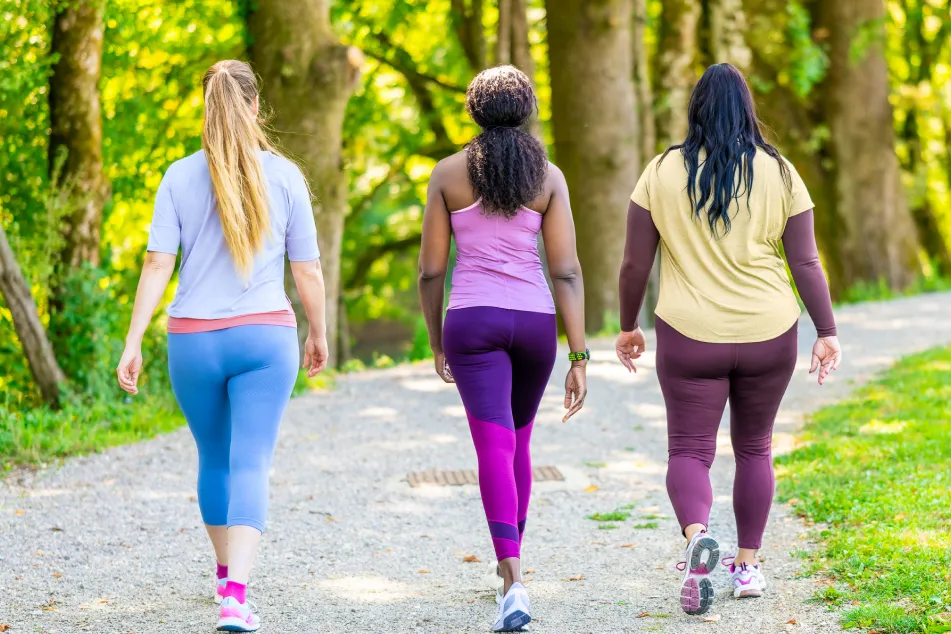
Neighborhood walking strengthens social ties, offering benefits beyond just physical activity, according to research on ways to reduce feelings of isolation and loneliness.
- Agree on a route. Achieve consensus on the length and distance of your walk, and pick a pathway wide enough to accommodate more than a single-file line.
- Consider accessories. Wearing a weighted vest and/or step counter can help you maximize the benefits of your walking workout and track your progress.
- Push yourselves. The average American takes 4,800 steps a day (2,500 steps = 1 mile). According to a 2025 study published in The Lancet Public Health, the benefits of increasing your step count by 50 percent can bring huge benefits:
- People who walked 7,000 steps a day (roughly 3 miles) experienced a 47 percent lower risk of death compared with those who walked 2,000 steps.
- Walking 7,000 steps a day was also associated with a lower risk of type 2 diabetes, depressive symptoms, and cancer death, when compared with walking 2,000 steps.
- People who walked 7,000 steps a day versus 2,000 had a nearly 40 percent lower risk of dementia.
3 of 4
Clear Your Head on a Streaming Walk

Eager to finish that book or catch up on your favorite podcast? That motivation may be enough to compel regular movement. Whether it’s audiobooks, podcasts, or music that keeps you engaged, save that treat for your daily walk as a reason to lace up and head out.
- Be aware. As much as you might want to block out noise and lose yourself entirely in your streaming content, it’s safer to hear what’s going on around you (like that speeding bicyclist who shouts “On your right!”). Adjust your earbud settings so you can still detect ambient noise, turn down the volume, keep one ear open, or invest in “bone conduction” headphones that don’t impair your hearing.
- Time it right. If the idea of walking for, say, a full hour sounds boring or daunting to you, time your walk to last the length of your podcast or playlist. That way, you’ll know that your walk ends when your program ends.
4 of 4
Multitask on an Errand Walk

If you need to go to the library or post office, try walking to those places instead of driving. Doing errands on foot is good for you and for the environment. Plus, don’t underestimate the mental health benefits that come from checking things off your to-do list.
- Bring company. Strap your child into the stroller or snuggly and bring them along. You’ll get even more of a workout walking your child and your groceries home at the same time. Plus you’ll both benefit from the fresh air and time together.
- Pack strategically. Bring a backpack or cart for your shopping list, shopping bags, and a water bottle to stay hydrated.
- Dress appropriately. Dress in layers for warmth, bring or wear a waterproof jacket for rain, always use comfortable walking shoes, and don’t forget the sunscreen.