When you join a Ticketmaster queue at 4 in the morning to buy Eras Tour tickets, it’s because you love your Swift-obsessed daughter to pieces.
When you wedge yourself into a middle seat on a bumpy flight with nothing but peanuts and a dream to sustain you, it’s because you know how good that vacation white sand will feel under your feet.
We do things we don’t love doing for reasons we love.
And yet, when it comes to exercise, so many of us move our bodies not out of affection or gratitude, but out of a far more negative reflex.
“I hate my thighs.”
“I just have to lose 20 pounds.”
“I can’t be seen in this bathing suit.”
Each January, nearly half of Americans make a New Year’s resolution to exercise more. But research shows that only about 1 in 4 stick with it past the first month — and by the time the Hallmark channel starts its Countdown to Christmas, fewer than 1 in 10 are still going strong.
We blame busy schedules or fading motivation. But for many women — especially those who’ve spent a lifetime wrestling with body image — the real culprit is seldom laziness. It’s shame.
So if you’re re-entering the gym, ask yourself: Am I doing this from self-love or self-loathing?
It matters more than you think.
Reflect back on a moment when you felt unworthy or inadequate. How desperate were you to feel better? Shame does that — it makes us scramble for relief.
Shame says, You are the problem. And the human heart will do almost anything to stop feeling like a problem. We sprint toward redemption — to be faster, thinner, better, fixed. It works — at first. But shame is a fast-burning fuel. It is excellent at igniting change, but that change usually burns out soon after it has sparked.
Here’s the loop:
I feel bad about myself, so I try to change.
I can’t sustain the change, so I feel bad about myself again.
Repeat.
Each lap we take around this vicious loop strengthens its grip on our self-esteem. Every “failure” confirms the same belief that started it: Something is wrong with me. And the more we believe that, the less we hold on to hope — the very ingredient that real transformation requires.
Now imagine that loop applied to your body: the cellulite on your thighs, the softness at your waist, the gravity-touched curve of your breasts, or the lingering COVID weight gain. If movementbecomes punishment for those things, it shifts from taking care of yourself to serving penance. Exercise turns into self-flagellation in Lululemon.
But here’s the nuance: Wanting to weigh less, to get stronger, to feel more capable in your body — it’s not wrong to want those things. The desire for these things can come from a place of deep self-love. The difference is the motive.
Self-loathing says, I need to change because I’m not enough as I am.
Self-respect says, I deserve to feel better in my body because I care about my life.
Your self-respect should never be contingent on your weight. But if you know your body is preventing you from having experiences you long for, movement can become a way to honor yourself.
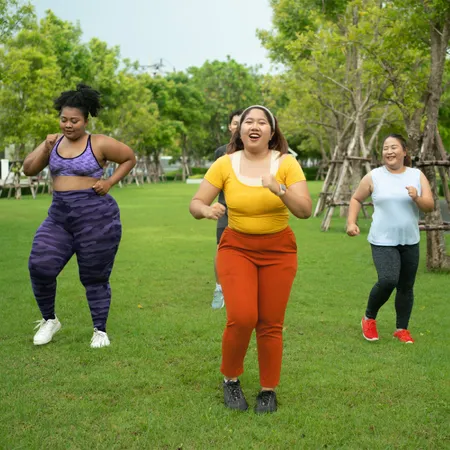
When the reason shifts, the whole experience changes. A walk becomes a way to breathe, not burn calories. Lifting weights becomes a conversation with your own resilience. Yoga stops being about flexibility and starts being about coming home to yourself.
The difference isn’t in what you do, it’s in why you do it.
Shame whispers, “Fix yourself and maybe then you’ll be enough.”
Self-love insists, “You already are enough — so take care of yourself accordingly.”
For those of us raised in the height of diet culture, that shift can feel almost radical. We were taught that discipline was virtue and that comfort in our own skin was complacency. But self-respect and self-love isn’t complacency. It’s the middle ground where accountability and compassion finally stop fighting each other.
When you exercise from radical self-love and, in turn, self-respect, you stop measuring progress in pounds and start measuring it in presence.
Did I show up for myself today?
Did I listen?
Did I act in alignment with who I want to become and how I want to live my life?
Lasting change isn’t built on punishment. It’s built on partnership — with your own body, your own values, your own humanity.
So the next time you move, don’t do it to fix yourself. Don’t do it to prove you’re enough.
Do it because you finally believe you might be.