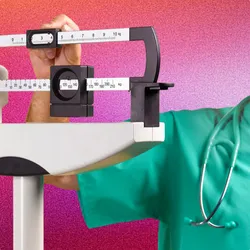
Each of us has an internal watchdog that’s constantly monitoring for and commenting on our struggles. For many people, that watchdog is a bully, spewing one self-critical message after the next — “What is wrong with me?” “I’m such an idiot.” “I screwed it up again.” “I’ll never lose weight.” “I can’t get anything done.”
While self-awareness propels growth, chronically looking at yourself through a negative lens distorts what you see and impedes, rather than enables, achievement of goals, as well as physical and mental health. If your inner critic is dominating the conversation, it’s important to take action to silence it, and invite other perspectives — compassionate or neutral ones — to the table. Here’s how to get started.
How Self-Criticism Begins
In a recent study in BMC Psychology, researchers cite a definition of self-criticism as “the feeling of being criticized, pushed down, imprisoned in the feeling of not being good enough and not having energy for new things and challenges in life over the long-term.”
Maybe we’ve internalized the critical feedback we received over and over again from parents, peers, or others in our lives. If you’re called “lazy” or “hopeless” for years, you begin to believe it. Over time, other people’s labels become harder to remove.
Sometimes the criticism we’re internalizing isn’t from a particular person, but from communities large and small. We’re bombarded with messages about how we should look and talk and move, or what kind of house or car or job we should have, which leads to feeling like too much, or not enough — too fat, too shy, not smart or rich enough. A number of things, including social media, have made it harder to avoid comparing ourselves to unrealistic cultural norms, whether that’s a model-thin body type or a superwoman who does it all.
In many cases, self-criticism is developed as a protective mechanism — you prepare yourself for failure or rejection in the hopes that, if or when it happens, you won’t feel as hurt.
Many Shades of Self-Criticism
When we’re self-critical, we look at our behaviors in one or more of these distorted ways:
- Overgeneralization: You see one event as a summation of yourself. “I always eat too much at parties.” “I’ll never get a new job.”
- “I should” statements: You motivate yourself with “I should” statements. “I should work out more often.” “I shouldn’t stay up so late.” While these may come from a desire to self-motivate, they lead to guilt and feelings of failure, which is highly de-motivating.
- Magnifying: You focus too much on negative behaviors and events, ignoring positive ones.
- Labeling: Rather than being critical of a behavior, you make statements about your character. “I’m such a loser.” “I’m a failure.”
Negative Self-Talk Hurts Your Mind and Body
Beating yourself up doesn’t feel good, but if you’ve been doing it long enough, it may feel normal. You may even consider it motivating, thinking that being hard on yourself gets results. Research disproves this theory.
Studies show that negative self-talk can wreak havoc on your mental and physical health, altering the way your brain functions and standing in the way of you achieving your goals.
- Mental health effects: Studies show that being self-critical is linked to depression and eating disorders, and can interfere with therapy. It’s hard to crack through the armor of chronic self-criticism.
- Increased stress: Studies show that when people have negative self-talk, their cortisol rises, which can lead to a cascade of physical stress responses, like a higher heart rate.
- Relationship strain: Negative self-talk can make a person hypersensitive to feedback or criticism from a partner or family member, which can turn up the heat during conversations.
- Impaired performance: Studies of athletes find that negative self-talk often impedes performance, while positive self-talk improves it. This can turn into a vicious cycle, in which self-criticism fuels under-performance which fuels more self-criticism. There’s also research showing that negative self-talk alters neural connections in the brain and can affect executive functioning.
Trade Self-Bashing for Self-Compassion
Your internal watchdog can be retrained. Changing a lifetime of thought patterns doesn’t happen quickly, but if you start small, you’ll build momentum so that self-compassion becomes your instinct. Kristin Neff, PhD, a co-founder of the Center for Mindful Self-Compassion, offers these steps that can start to shift your thinking.
Notice your self-critical thoughts. We often don’t even realize we’re berating ourselves. Take note of the language you use. Do you repeat certain key phrases, like “I’m such an idiot?” Does this self-talk echo the remarks of someone you know? You can also write it down. Describe a situation in which you feel bad about yourself and the types of things you say to yourself.
Pause to self-soothe. When you hear your self-critical voice, pause to take a deep breath or do something calming. This can short-circuit the negative talk and give you a moment to gain perspective. You can also gently rub your arm. Physical touch can help tap into your self-compassion.
Reframe your critical thoughts. Think about the supportive things you’d say to a friend in your position and use those compassionate words on yourself. If you binged because you were stressed one night, say, “You were under a lot of stress. It’s not easy, and it’s OK.” It may help to write down a compassionate response that can serve as a reminder when you recognize negative self-talk starting up.
Make your framework self-improvement. Rather than beating yourself up over something you did in the past, think about how to move forward. If you didn’t make it to the gym, rather than say, “I’m so bad about working out,” ask yourself, “What got in the way today, and how can I avoid that the next time?”