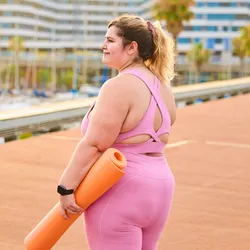
Q: When I exercise, I never seem to lose weight, so what is the point?
I’m going to offer advice that may be surprising: Don’t exercise to lose weight.
Let me clarify: Do exercise, but not in an effort to shed pounds. Exercise because it’s the single most beneficial thing you can for your physical and mental health, besides sleeping.
The focus that’s been put on exercise for weight loss has sent a message so flawed that it’s resulted in large percentages of the population not exercising at all. We carefully consider whether low- or high-intensity exercise is better at melting away fat and obsess about how many calories we burn per minute. We translate minutes on the treadmill to food items “earned.” And when the pounds don’t come off, we are filled with frustration, wondering: What was the point of all that? It’s a reasonable question.
The benefits of exercise, though, are so much broader and deeper than a calorie burn. Besides the well-known impact on your cardiovascular health, exercise offers potent and entirely overlooked benefits — from boosting brain, gut, and bone health to helping us build the resilience we need for longevity.
Knowing the whole-person health implications of exercise may help you retain motivation to be active, no matter what number you’re seeing on the scale.
Exercise to improve your mind and mood.
Both cardio and strength training offer proven benefits for your cognitive and emotional health. As you age, your brain neurons start to deteriorate unless you do something to prevent it. Exercise induces an increase in BDNF (brain-derived neurotrophic factor), a protein that both stimulates the growth of new brain neurons and protects old ones, reducing the risk of cognitive impairment, including dementia and Alzheimer’s disease. It also triggers the release of neurochemicals like serotonin and dopamine that can improve mood and reduce symptoms of depression and anxiety. Research shows it also improves processing speed, memory, and executive function.
Exercise to improve your gut health.
Your gut microbiome contains trillions of good and bad bacteria and other microorganisms. Exercise has a direct impact on your gut health by increasing the diversity of organisms in your microbiome, as evidenced by a recent study in Microbiome.
A diverse microbiome, in turn, is linked to a number of health benefits. Good bacteria are known to digest short-chain fatty acids, which improves metabolism and triggers the release of neurochemicals in the brain.
Other benefits associated with a healthy gut microbiome include:
- Improved digestion and lower risk of irritable bowel syndrome
- Improved immune function
- Increased nutrient absorption
- Reduced risk of cardiovascular diseases, diabetes, and colon cancer.
Interestingly, improved gut health also lowers the incidence of obesity.
Exercise to build emotional resilience.
Evolution suggests that the human body adapted to regular exercise because physical activity was required to hunt and gather food, needed for survival. In between these periods of exertion, we rested. This necessary physical activity activated our bodies through controlled stress, and periods of rest allowed for repair. In this way, the human body developed resilience.
Exercise continues to be a perfect, low-stakes way to gain experience recovering from setbacks and adapting to change. Resilience doesn’t shield you from challenges; it allows you to tackle them head-on, to learn how they affect you, and then create strategies to bounce back. When you keep running for 3 miles, though you want to stop at 2, the experience of successfully pushing through obstacles translates into other areas of your life. Every time we exercise, we are building resilience, not just in our bodies, but in our minds as well.