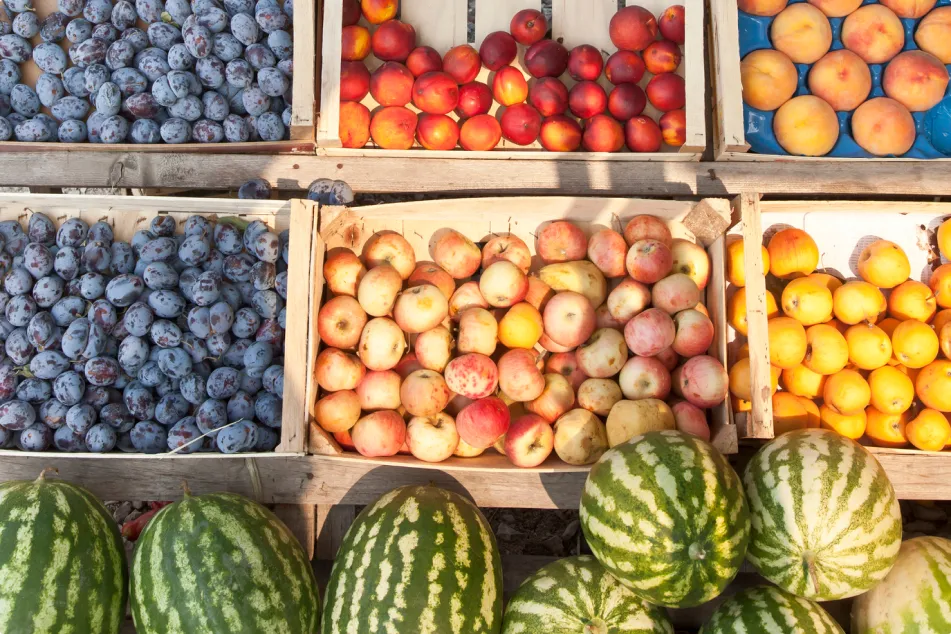
Pineapples in February. Oranges in August. Apples in May. Thanks to our global food industry, produce formerly known as “off-season” is now grown in fields and greenhouses halfway around the world and shipped quickly (albeit a bit underripe) to a green grocer near you.
But are crops from afar as flavorful and nutritious as local, in-season produce?
Advocates of the “seasonal eating” movement, who make locally grown foods the foundation of their diet and promote sustainability by supporting local farmers and growers, would argue “no.” They believe that in-season produce is fresher, tastier, and better for the environment because it does not require long-distance transport and is picked at its peak of ripeness. Indeed, some studies show that fruits and vegetables contain more nutrients when allowed to ripen naturally on the plant.
Then there's the theory of xenohormesis, which also supports the idea that local, seasonal fruits and vegetables are better for your health.
If you’re not a chrononutritionist (and we’re guessing you’re not) — someone who studies the interactions between biological rhythms and nutrition — you probably haven’t heard of the xenohormesis theory, which postulates that “animals adapt to changes in the environment by consuming substances produced by plants which act as signals of external conditions in which the plants were grown,” according to authors of a study called Eat Fruits In-Season to Give Rhythm to Your Life. Think of bears eating berries in the summer, which helps them prepare for hibernation in winter.
Apply that to humans and the thinking goes that fruits and vegetables provide our bodies with information about the environmental conditions in which they were grown (dry vs. wet, hot vs. cold, etc.) that send us signals to adapt to seasonal changes.
“Eating fruit in-season is associated with optimal health effects,” the researchers write. “Hence, we must eat fruits in-season so that the rhythms of our lives are synchronized with the seasons.”
Enjoying Produce at Its Peak
Does that mean you should avoid eating oranges in July? No, researchers agree. It’s still better to eat foreign fruit than no fruit at all. So enjoy sweet and juicy citrus varieties (traditionally grown in winter) whenever and wherever you can, and remember that the American Heart Association recommends eating five servings of fruits and vegetables per day.
Here are more ways to make the most of delicious seasonal produce:
Consult Labels and Signage
Stores are required to use Country of Origin Labels (COOL) on all produce, which indicate where that produce was grown — be it Mexico, Chile, the U.S., or elsewhere.
Learn What’s in Season
Check out the USDA’s Seasonal Produce Guide to see what’s growing now, or consult regional resources like university agricultural extensions. Visit local farm stands and farmers’ markets, or subscribe to a community-supported agriculture (CSA) program.
Consider Picking Your Own
Visit local “pick-your-own” farms and gather your own apples, peas, peaches, cherries, pumpkins, berries, potatoes, and more. It’s often less expensive than buying produce at the grocery store and provides a great excuse to gather with friends and/or family members outdoors.
Preserve It!
Consider drying, freezing, or canning fruits and vegetables when they’re in season, which is a good way to make summer produce last throughout the year. You can do it yourself or purchase jarred, canned, or dried produce at stores or farms.
Research Recipes
There’s no better way to incorporate delicious seasonal fruits and vegetables into your diet than to research recipes for tasty salads, smoothies, deserts, entrees, and more. Google your favorite foods, prep your kitchen, and enjoy!