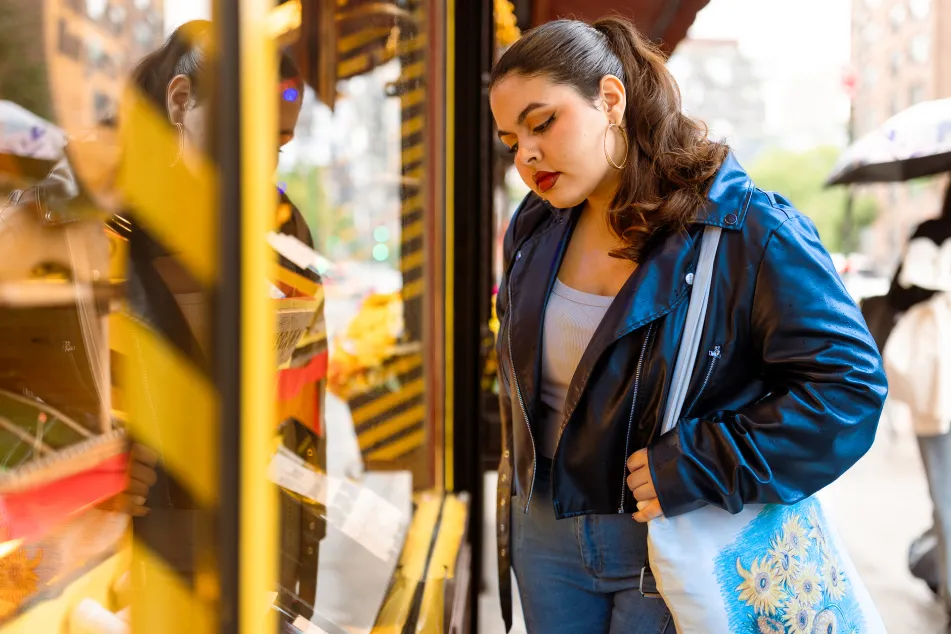
Q: I don't like to shop because it's hard to find clothes that seem flattering on me. Where do I start?
Shopping can feel so overwhelming. When the mountain of options seems to tower over us, we often get tired of looking and just give up, or we buy the wrong things to end the ordeal. Following this series of steps and adhering to these specific parameters can help cut through the noise.
- First, shift your expectations. Not all clothes have to be conventionally flattering. After all, this term tends to translate to “makes you look thin,” which is often an unrealistic goal since we’re all made differently. Begin to reconsider your priorities for your clothing so that they reflect your personal style and what’s comfortable for you above all else.
- Take an intentional look at the contents of your closet. This is helpful for a few reasons. First, you want to note why you’re not wearing what you have so that you can avoid getting more of those kinds of things in the future. Secondly, you want to make sure that you’re not rebuying things you already have.
- Pin a few images of clothing items you love on Pinterest to give you a visual of your fashion goals.
- Create a specific shopping list. Instead of writing down “pants,” note “heavyweight black barrel leg elastic waist pants.”
Now, you may do all of the above and still find that shopping sucks. You’re not the only one.
We are all created with unique and varied shapes, sizes, and proportions — and most clothing is mass produced based on only one specific shape. It’s no wonder nothing fits. Until we all go back to sewing our own clothes, there’s only one fix for that: trying on more than you think you need to.
In more than 12 years of working with hundreds of women, I’ve seen firsthand that typically 1 out of 10 items you try on will actually work for your unique lifestyle, aesthetic style, and shape.
That pair of black pants you’re looking for? Expect to try on versions from multiple stores, in multiple sizes, before you find ones that work. Not everyone can easily access their sizes in person, so if you’re ordering online, go ahead and add multiple styles and sizes to your cart. None of us want to add to our carbon footprint, but brands aren’t doing enough to make their size charts accurate enough for us to get the right size right off the bat. If you buy two sizes at once and return one, that’s actually more efficient than ordering one that ends up not fitting, returning it, and then ordering the correct size.
If you wear sizes outside of what mainstream stores produce (straight sizes, or sizes 0-12), there will be an additional layer of difficulty to this whole process.
Shopping may still be a dreaded chore, but prep work and tempered expectations may remove some of the frustration and disappointment.