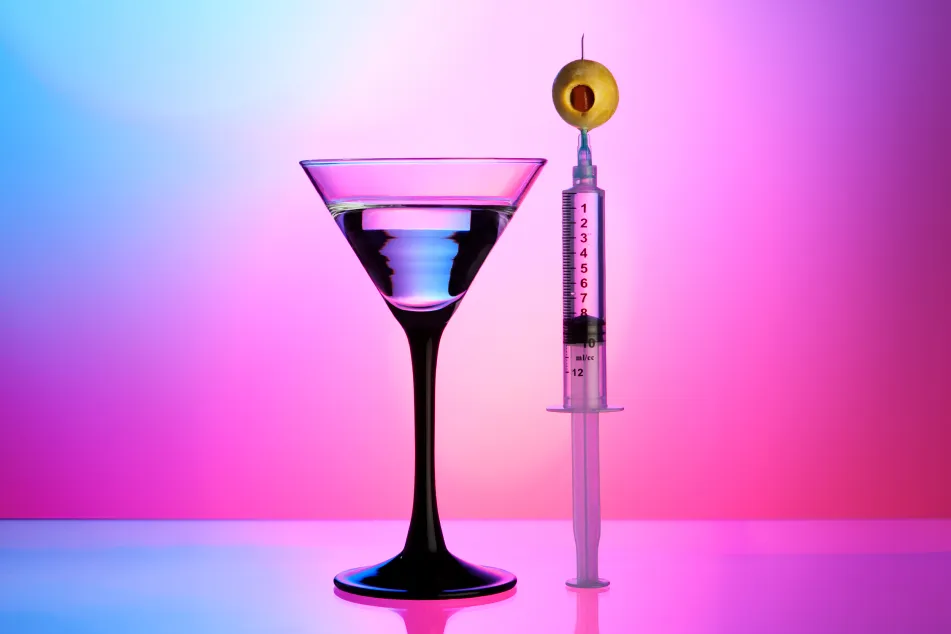
Science and experience confirm that GLP-1 receptor agonists quiet food noise and reduce appetite. Now, mounting evidence suggests they also curb cravings for alcohol.
In a recent randomized clinical study published in JAMA Psychiatry, people with alcohol use disorder (AUD) — which is characterized by an impaired ability to stop or control alcohol consumption despite adverse consequences — who took semaglutide (i.e., Ozempic or Wegovy) once a week for nine weeks experienced a significant reduction in alcohol consumption.
Other studies show similar results, with the desire for alcohol dissipating among patients taking semaglutide. (There are no comparable published studies of people with AUD who take tirzepatide, the active ingredient in Zepbound and Mounjaro, but preclinical studies suggest similar results.)
GLP-1s May Influence Reward Signaling
GLP-1s are also showing promise in calming other addictions — to substances like cannabis, opioids, and tobacco — with patients reducing their smoking, drinking, and eating while taking the medication. Researchers aren’t sure why GLP-1 users’ distaste for food extends to alcohol and other substances, but there are several theories.
“Food and alcohol both engage overlapping reward pathways, so changing reward signaling can affect multiple ‘reinforcers’ — not just eating,” says Fares Qeadan, PhD, MS, a professor at the Parkinson School of Health Sciences and Public Health at Loyola University Chicago. “Separately, GLP-1 medicines can change how people feel after consuming things (fullness, nausea, GI discomfort), which may reduce desire for alcohol for some people."
Questions Remain
Given these off-label benefits, will GLP-1 medications be approved for treating AUD in addition to obesity and diabetes? Not without additional research, say scientists. “Although the results are promising, they highlight the need for further research to validate these associations and understand the underlying mechanisms,” writes Qeadan in his research report published in Addiction.
Questions being explored in research include:
- Which medication (and dose/duration) works best for alcohol outcomes?
- Which patients benefit the most (and the least) from GLP-1 use?
- Are effects mainly driven by weight loss changes or by direct brain impacts?
- What are the real-world tradeoffs around tolerability, adherence, and equity of access?
If you're already taking a GLP-1 agonist for obesity or diabetes, and you’ve noticed that you’ve lost your taste for alcohol, know that scaling back on wine, beer, and spirits improves overall health.
The Benefits of Cutting Back
Alcohol consumption has been linked to liver disease and many forms of cancer, so it’s good to drink less, especially while taking a GLP-1 medication, which can contribute to dehydration and nausea. Imbibing regularly can also lead to weight gain, thanks to alcohol’s high caloric density. Alcohol can also slow metabolism and lower inhibitions, causing some people to indulge in high-fat and high-sodium foods when they drink.
Approved treatment for AUD currently includes a combination of counseling (CBT and other types of behavioral therapy) and medication (naltrexone, disulfiram, acamprosate), along with support through organizations like Alcoholics Anonymous (AA). However, this combination does not guarantee sobriety, and relapse is common.
If you’re trying to cut back on alcohol without the benefit of a semaglutide medication, try switching to nonalcoholic beer (which is growing in popularity), skinny cocktails (with less sugar and, in some cases, less alcohol), or alcohol-free mocktails. Drink a lot of water to satisfy your thirst, ideally eight glasses or more each day.
If cutting back proves difficult and you think you have a drinking problem — signs include wanting a drink so badly, you can’t think of anything else — talk to your doctor or call the national helpline from SAMHSA (the Substance Abuse and Mental Health Services Administration) at 800-662-HELP (800-662-4357).