
When you eat intuitively, you understand and honor your body's cues, rather than rejecting them by sticking to strict rules of popular diets. The benefits include improvements in everything from mental health to metabolism, explained Nicole DeMasi Malcher, MS, RD, CDCES, in the Embody workshop "Learn About Intuitive Eating: A Sustainable, Anti-Diet Nutrition Approach." Here are five surprising lessons we learned about yo-yo diets, the psychology of restriction, and why intuitive eating paves the way for a healthy relationship with food.
1 of 5
Chronic dieting decreases your metabolism.

Diets tend to follow a frustrating trajectory: Early progress is followed by a plateau, then a slow rebound as the number on the scale slowly creeps back up, despite continued hard work, sacrifice, and motivation. "It's like my body doesn't want me to lose weight," Embody readers have remarked. And, in a way, this is true.
"Our bodies are hard-wired for survival. This is how we have survived as a species," Malcher said. "When your body senses a famine, it doesn't understand this might be self-inflicted, and it goes on high alert. It's going to increase its ability to find food, to make you hungrier so that you can survive."
Your lean muscle mass, critical to maintaining your metabolism, will decrease and cravings for carbohydrates will increase in response to restriction. This helps to explain why diets seem to produce short-term results that fade or reverse in the long run. In fact, Malcher explained: "Studies show that dieting is one of the strongest predictors of future weight gain."
2 of 5
Labeling a food 'off-limits' makes you want it more.
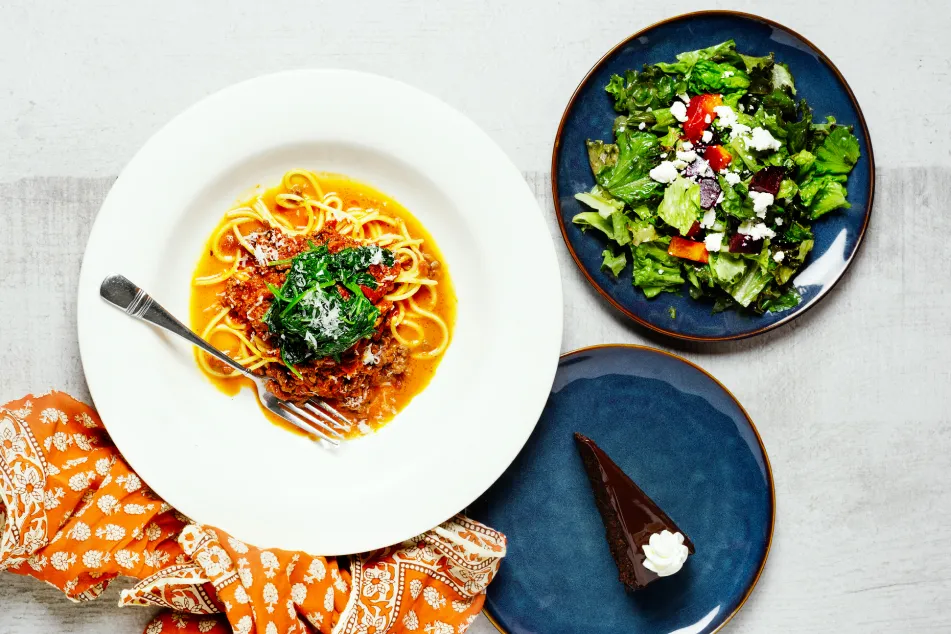
Strict diets may outlaw certain foods like carbohydrates, chocolate, or cheese. You withhold them and then, when you find yourself face-to-face with these forbidden "temptations" in the wild, you may feel out of control. "I shouldn't be eating this chocolate," you may think. "I don't know when I'll have this chance again, so I'd better eat all of it while I can." This is part of how restriction often leads to bingeing.
To avoid this scarcity mindset trap, Malcher recommended adopting an "all-foods-fit approach," which rejects the idea that foods are either "good" or "bad," "allowed" or "outlawed."
"When all foods are allowed, their power over you diminishes," Malcher said. "You always get to have it, so it's not as exciting anymore."
3 of 5
Ignoring your hunger always backfires.

Sometimes, restriction is unintentional, like when you're so busy working that you forget to eat. You may silently congratulate yourself for skipping a meal, even if by accident, but ignoring your hunger tends to backfire. Intense hunger leads you to make unhealthy, impulsive food choices and sets the restrict/binge pendulum in motion, often triggering a shame spiral.
"It's important to let your body know that you have regular access to food, and to check in with your body regularly so you can observe, and act on, early signs of hunger," Malcher explained. "Keeping your body adequately fed prevents that primal drive to overeat later on."
Honor your body's needs by feeding it nutrients, and by making eating a satisfying experience with tastes, textures, and even colors you enjoy, Malcher said. Ask yourself, "Will this keep me full?" If your meal will likely leave you hungry soon after, add what's missing: carbohydrates, protein, or fat.
4 of 5
It's more sustainable to focus on how your body feels, not what it weighs.

Because a sudden calorie deficit slows your metabolism and restriction leads to overeating, most diets end up "yo-yoing." You lose weight, then gain it slowly back, then you try another diet, and you swing the other way again, like a pendulum.
Not only is restrictive dieting not good at achieving its end goal of sustained weight loss, but it also brings other harms. "Yo-yo dieting brings a risk of inflammation, premature death, and heart disease," Malcher said. "You have to ask: Is the pursuit of weight loss in and of itself actually helpful?"
A more effective strategy is working to build interoception, the ability to interpret your body's cues, such as hunger, thirst, fatigue, and pain. Think about how your body feels and functions, rather than how it looks and what it weighs. Move to feel good, rather than to burn calories. Choose what to eat based on what you like, then add in nutritive components. This approach benefits your mental health, and it's more likely than strict dieting to promote long-term weight loss.
"Intuitive eating is not anti-weight loss," Malcher said. "It's just anti-prescribed weight loss."
5 of 5
Intuitive eating is not permission to eat anything and everything.

"There's a misconception that intuitive eating means eating whatever you want, whenever you want it. That's not true," Malcher explained. "It's an eating framework based in self-care that integrates instinct, emotion, and rational thoughts."
Intuitive eating doesn't ignore nutrition or health. Instead, it cultivates an awareness of what's driving your choices because it requires staying connected to your body and your mind.
Often, Malcher said, we think about "emotional eating" as negative behavior that needs to be fixed. But eating is often emotional – and that's not always a bad thing. "It's normal to use food to regulate emotions," Malcher explained. "It's when it's your only coping tool, that it becomes a problem."
In essence, intuitive eating rejects the idea that your body is your enemy, which will betray you, if you let it. Instead, Malcher said, it asks you to consider the body a trusted friend, and let it lead the way.